
Vol. 56, No. 3 - Fall 2026
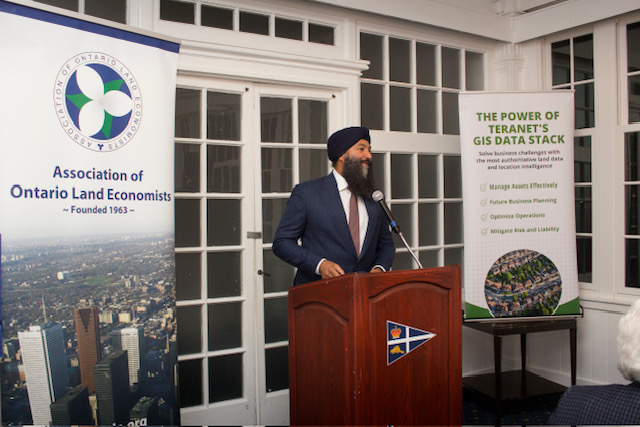
Minister Sarkaria spoke to Ontario’s $70 billion transportation investments and the critical role it will play in supporting the province’s growing population today, and for generations to come. The Journal article draws on the topics discussed, supplemented by information from official published announcements, reports and information provided by the Ministry of Transportation. The themes covered were as follows:
Making regional transit more affordable through One Fare
Launched in February 2024, the One Fare program, the Minister said “continues to be a game changer for commuters across the GTHA, letting riders pay only once when transferring between the TTC, GO and other participating municipal transit systems.
By March 2026, the province reported nearly $233 million in savings and 72 million free transfers, putting money back in your pockets by saving the daily transit user up to $1,600 annually.” The Ontario government has chosen to extend the program for an additional two years and announced that they are “taking further action to make public transit easier and more affordable across municipalities in the GTHA. It is moving forward with legislation, followed by engagement with partners, to explore expanding free transfers, simplifying fares, improving cross-boundary travel and enhancing specialized transit.” See more details
Delivering a substantial increase in GO train service
According to an April 17, 2024 Metrolinx press release, GO added more than 300 weekly train trips, marking the largest service increase in over one decade. Improvements included two-way, all-day service across select GO network sections, 30-minute weekday midday and evening service between Bramalea and Union, restored evening Stouffville service, and additional Milton rush-hour trips.
Bringing two major Toronto transit lines into passenger service
The 18-stop, 11-kilometre Finch West LRT opened December 7, 2025, connecting Line 1 to Humber Polytechnic, “bringing commuters just mere walking distance to jobs, opportunities and housing”, said the Minister. On the newly built and innovative Finch West LRT, Minister Sarkaria emphasized the significant benefits this transit line will bring to commuters across the region. “Our government is proud to deliver the Finch West LRT, which will bring hundreds of thousands of people within walking distance of fast and affordable transit. In the face of economic uncertainty, we’re protecting Ontario with historic investments in transit infrastructure to relieve gridlock, connect more people to good-paying jobs, and keep our economy moving,” said Minister Sarkaria. See more details here
Beyond the Finch West LRT, the Eglinton Crosstown began passenger service on February 8, 2026, marking another major milestone in Ontario’s transit expansion.
Completing additional capacity on Highways 400 and 404
In January 2025, the province announced completion of nine kilometres of Highway 400 widening, from Major Mackenzie Drive to King Road, adding a general-purpose lane each way. It also completed 11 kilometres of Highway 404 widening, between Highway 407 and Stouffville Road, adding HOV lanes in both directions.
An Ontario Government News release dated January 28, 2025 mentioned that it is “part of its plan to tackle gridlock and support the safe movement of people and goods in the Greater Toronto Area (GTA). The new lanes will allow cars and trucks travelling north and south to benefit from faster, more efficient commutes, supporting the GTA’s growing population, and connecting people to more housing and jobs.” Said Minister Sarkaria. “Not only is gridlock costing our economy billions of dollars every year, it’s robbing Ontario drivers of valuable time and quality of life. Expanding Highways 400 and 404 will provide much needed relief for drivers, helping them spend less time in traffic and more time with their families and friends.” See News Release
Supporting existing municipal transit, roads and bridges
The Ontario government also committed more than $380 million to 106 municipalities for local transit, through the Gas Tax program, helping communities maintain and improve transit services for riders across the province, said a Ministry spokesperson.
Separately, the Government of Ontario announced in its 2025 Budget that annual Connecting Links funding increased from $30 million in previous years to $45 million, helping municipalities repair roads and bridges that form part of provincial transportation routes. The 2026–27 allocation continued at $45 million according to another Ontario Newsroom report dated March 13, 2026.
Helping fund replacement trains for Toronto’s aging Line 2 fleet
As part of the province’s $70 billion investment to build transit infrastructure, Ontario increased its commitment from $758 million to more than $950 million toward 55 replacement subway trains, matching increased federal funding.
The procurement includes 55% Canadian content, supporting domestic manufacturing while addressing the need to replace aging equipment. This is a funded investment; the replacement trains are still to be delivered. See More Details
Niagara District Airport Expansion
On July 20, 2026, the City of Niagara Falls announced in a media release the following: “Today, Niagara District Airport received an investment of $9.7 million from the Government of Ontario to advance its airport redevelopment project, as outlined in its 2025-2045 Master Plan.”
The province’s support marks a critical step in advancing our Master Plan and realizing our vision of becoming a modern regional gateway,’ says Daniel Pilon, chief executive officer. ‘This funding brings us one step closer to introducing scheduled commercial service to Niagara, serving more than half a million residents and 13 million annual visitors. We thank Premier Ford, Minister Sarkaria, and the provincial government for their continued partnership and shared vision of enhancing air access to Niagara.’
“The Airport’s redevelopment is aligned with the province’s Destination Niagara Strategy, supporting the growth of tourism, improving travel access for residents, and creating good-paying jobs. The redevelopment project will unlock new economic opportunities across the Niagara region, benefiting Niagara’s hotels, restaurants, wineries, entertainment venues, historic sites, and visitor attractions.
The Airport’s Master Plan projects more than $1 billion in economic output, the creation of 1,100 construction jobs, and 500 permanent jobs once the modernized airport is fully operational. View The Land Economist Fall Issue to read other interesting articles and view our September AGM photo gallery.